
‘’Population is growing and work is declining‘’: such is India’s major challenge. These days, even after going to school, it’s extremely difficult to find a career path. Trainings and studies are costly or selective (and corruption is widespread), unemployment is high, especially among young people: in fact, 45% of youth aged 20- 24 in India were unemployed in December 2023, according to Center for Monitoring Indian Economy.
For women in particular, the challenge is huge: in India, the employment rate for women is only 25% in 2024 (Economic Times). Finally, more than 75% of Indians are street vendors, deliverymen, drivers and tea sellers: informal economy and jobs represent almost 85% of Indian economy (The Hindu, 2024). For the poorest, where everything is more difficult, families struggle to provide an environment suitable for their children’s studies (poor sanitation, insecurity, domestic violence, etc.) or often do not understand the importance of higher studies.
Our “After 10” program is for teenagers who want to continue their education and receive support in their job search. We encourage every teenager leaving HSP to complete their final two years of high school. We also encourage them to pursue higher education or vocational training. The program also supports underprivileged and orphaned children who have not stayed in our homes. After 10 provides financial assistance, training and local job opportunities, help with administrative procedures, and more.
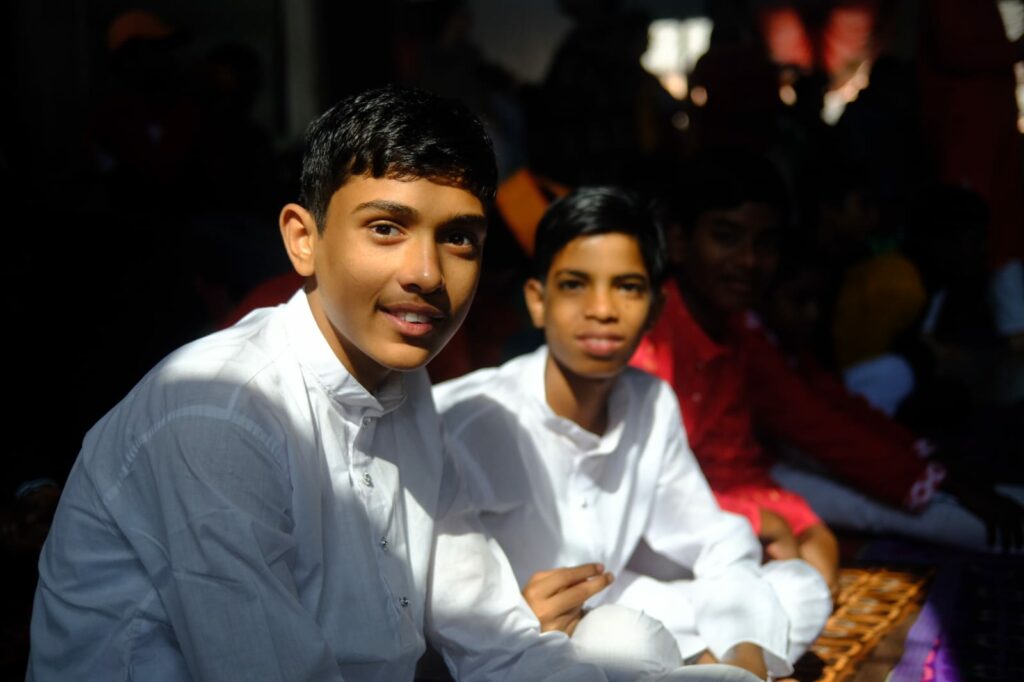
Since 2023, a girls’ home (Howrah) and a boys’ home (Jalpaiguri) have been opened to provide a supportive learning environment for those who need it. A career fair is also held annually to introduce children to various professions and inspire them.
We offer tailored professional opportunities to the people with disabilities we support through various training workshops. They are offered training in agriculture, printed fabric production (batik), jute crafts, and the creation of orthotics for children with disabilities. These workshops primarily aim to foster autonomy and develop each participant’s talents. In our orthotics workshops, in particular, we address the needs of children in our homes as well as those of other children in the local community. Each activity thus becomes a concrete way to restore confidence, dignity, and independence to those who need it most.
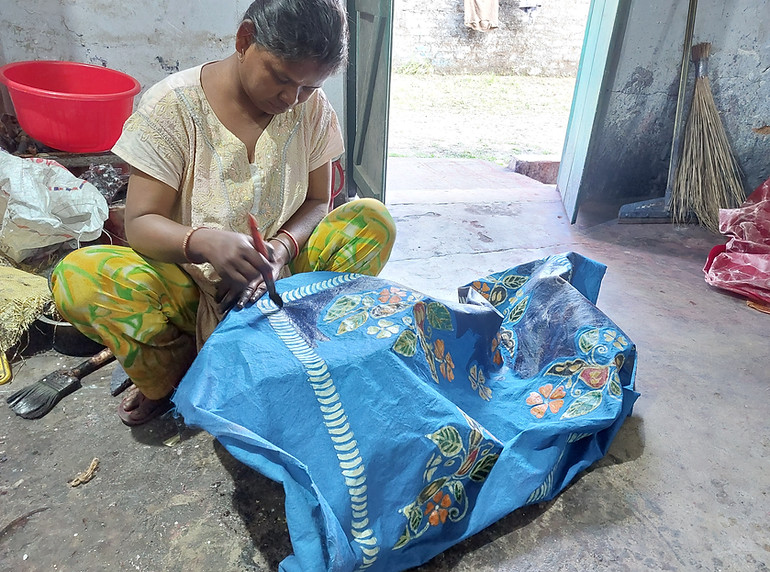
Located in Howrah, the workshop uses the traditionnal Batik dyeing technique to produce table clothes, bed sheets, Churidar tops, wall hangings, blouse piece, etc. One piece alone can take up to one month to be ready, due to the different colour layers needed. More than 200 pieces are produced per year.
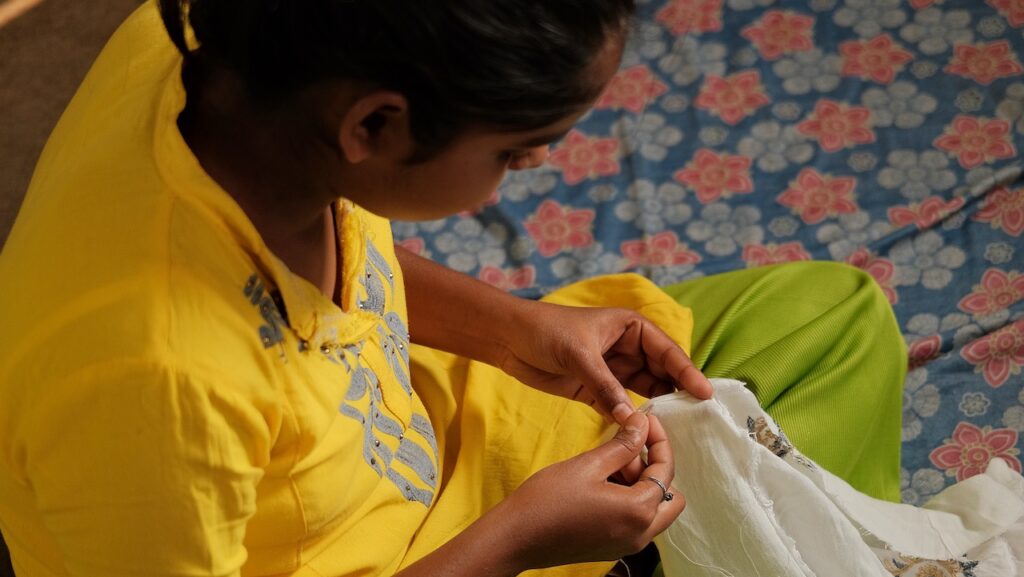
Located in Howrah, the knitting workshop produces sweaters, mufflers, tops and other warm items, all in vibrant joyful colours. The items are sold or serve the needs of the different homes. Around a 100 items are produced every year.
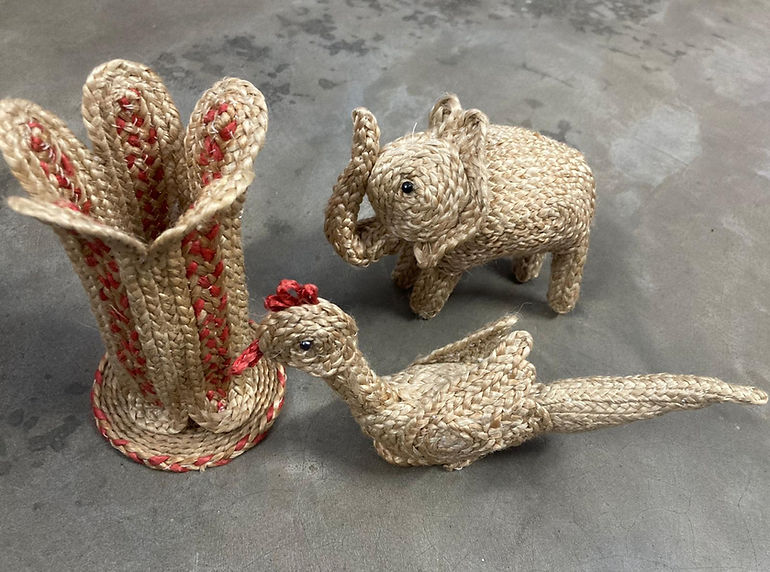
In Maria Basti Home, Jalpaiguri, physically and / or mentally challenged women spend their whole life. They work following their capabilities to produce objects from jute, they also make candles and incense items. The products of the sales helps them to provide for the home.
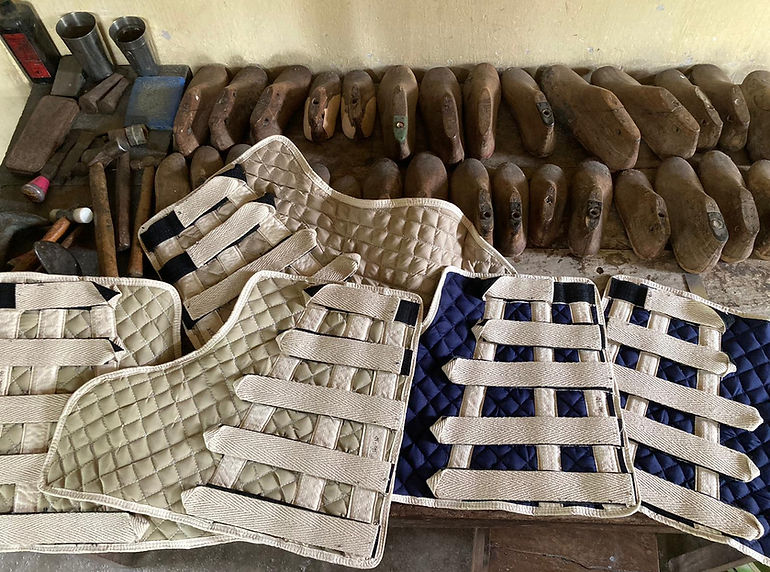
Two workshops, one in Howrah and one in Jalpaiguri cater to the needs of the children from the various homes by producing ankle foot orthosis, gaiters, special chairs, splints, belts, surgical shoes, strap sandals, etc.
Each piece is designed for a specific child and their needs. Outdoor children can also benefit from the workshop.
Your generosity is invaluable to us. Each of your donations directly supports our work in the field: equipment, meals, reception facilities, staff salaries, and development.